The Flow from Random Number Generation to Player Payouts Under America's Fragmented Bingo Oversight System
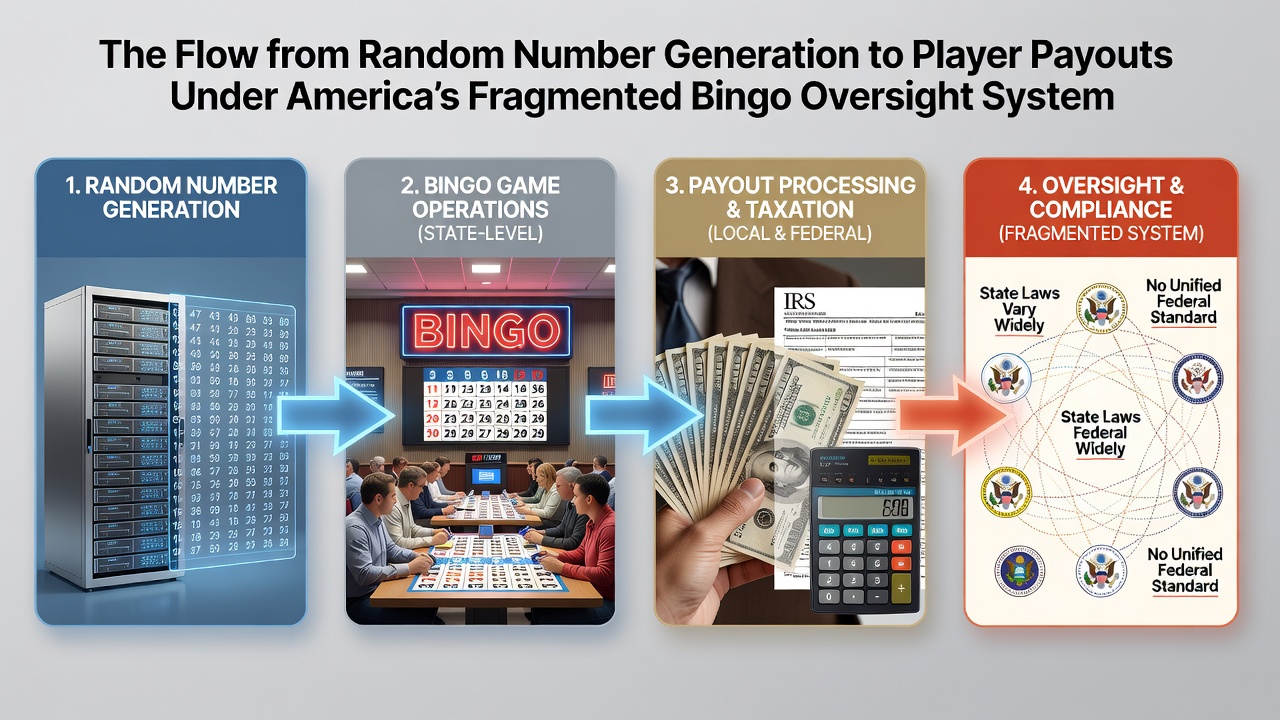
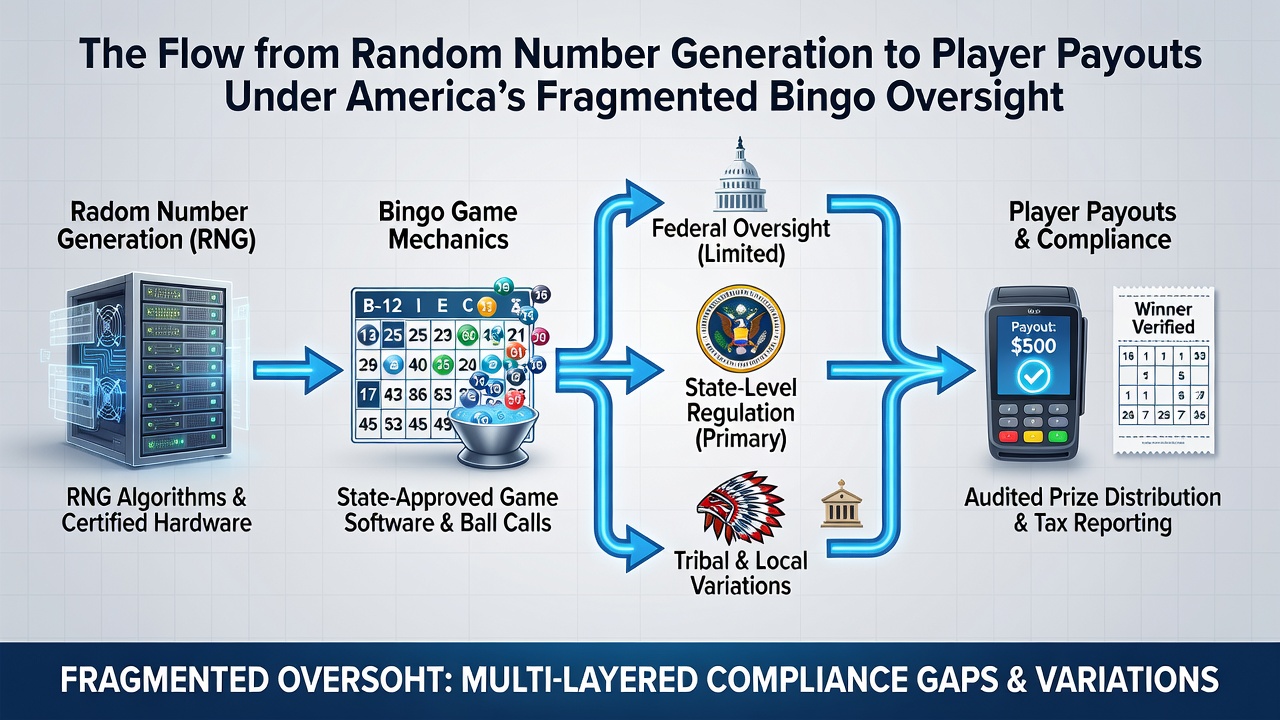
America's bingo landscape operates through dozens of separate regulatory frameworks that each impose distinct requirements on how random numbers get generated, verified, and converted into player payouts, and this patchwork creates a complex pipeline from the first ball drop or electronic draw to the moment cash reaches a winner's hands.
Random Number Generation Across Jurisdictions
Mechanical ball machines still dominate many traditional halls in states like Texas and Ohio where regulators require physical randomization devices that undergo frequent calibration checks, yet electronic random number generators have gained ground in tribal facilities and larger commercial venues because they allow faster draws and integrate directly with digital card systems. Each state sets its own technical standards for these generators, with some demanding third-party testing labs to certify that sequences remain truly unpredictable while others focus more on audit trails that track every draw from the moment play begins.
Those who manage bingo operations in multiple states often find that a generator approved in one jurisdiction may need re-certification or hardware modifications before it can be used just across the border, and this forces operators to maintain separate equipment inventories that comply with local rules rather than a single national standard.
From Draw to Verification
Once numbers emerge from the generator, the flow moves into pattern recognition systems that compare drawn sequences against player cards according to rules that vary by venue and state, and many jurisdictions now require electronic verification tools that automatically flag winning cards while logging the exact sequence of draws for later review. In states with strict charitable gaming rules, observers note that manual verification by multiple staff members must accompany any electronic system to prevent disputes, whereas tribal regulators under the Indian Gaming Regulatory Act often allow more automated processes as long as detailed records get submitted to oversight bodies on a regular schedule.
Mapping Prize Structures to Regulatory Demands
Prize calculations begin with the total amount collected from card sales minus the percentage that regulations in each state allocate to the charitable organization or operator, and these formulas can shift dramatically depending on whether the game falls under general charitable bingo statutes or specific electronic gaming provisions. Data from multi-state operators shows that some jurisdictions cap the maximum single payout while others tie prize pools directly to the number of cards sold, creating payout structures that change from session to session based on local formulas rather than a uniform national approach.
What's interesting is how these differing formulas affect the timing of payouts, because some states mandate immediate cash distribution at the hall while others require documented verification periods that can delay payment by hours or even days, and operators must therefore design their internal procedures to match whichever set of rules applies to that particular location.
Record Keeping and Disbursement Procedures
Every jurisdiction demands its own version of transaction records that link the original random number sequence to the final payout, and these logs must often be retained for periods ranging from one to seven years depending on state statutes. Facilities in states with tighter oversight frequently use integrated software that automatically generates reports for regulators, while smaller operations in less restrictive areas may still rely on paper ledgers that get reviewed during periodic inspections.
Tax withholding requirements also vary, because some states treat bingo winnings as reportable income subject to immediate deductions while others leave that responsibility entirely to the player, and operators must adjust their payout windows accordingly to stay compliant with whichever set of rules governs their location.
Current Landscape in July 2026
As of July 2026, several states have updated their electronic gaming provisions to require real-time reporting of draw sequences directly to regulatory portals, and this development has pushed more operators toward cloud-based systems that can transmit data instantly while still maintaining the local verification steps each jurisdiction demands. The National Indian Gaming Commission continues to publish guidance that helps tribal facilities align their RNG and payout systems with both federal expectations and the additional layer of state-tribal compacts that often exist in certain regions.
Meanwhile, the National Conference of State Legislatures has tracked ongoing legislative proposals that could further standardize certain equipment testing requirements across multiple states, though any such changes would still leave significant room for local variations in how payouts actually reach players.
Conclusion
The journey from random number generation to player payouts in American bingo therefore remains a state-by-state process that requires operators to navigate overlapping rules on equipment, verification, record keeping, and disbursement timing, and this fragmented structure continues to shape every aspect of how the game functions from one jurisdiction to the next. Those who study these systems note that the absence of a single national framework has produced a wide range of compliant practices that all achieve the same core outcome of delivering verified winnings to players while satisfying local regulatory demands.