Bingo's Hidden Layer: How Venue-Specific Marking Protocols Align with Broader Legal Distribution Guidelines

Venue-specific marking protocols in bingo operate as quiet mechanisms that connect daily card handling with larger legal requirements for prize distribution across multiple jurisdictions, and these systems often incorporate unique stamps, digital logs, or sequential verification steps that venues adopt to satisfy both local oversight and statewide or national distribution rules. Observers note that such protocols vary by hall yet consistently tie into frameworks designed to prevent duplicate claims, ensure accurate payout tracking, and maintain records that regulators can audit without disrupting ongoing sessions.
Core Elements of Venue Marking Systems
Marking in bingo halls extends beyond simple dauber use because venues layer additional identifiers onto standard cards, including color-coded seals or timestamped entries that record each winning pattern completion in sequence. These additions allow staff to cross-reference player claims against a central log before any prize release occurs, while the process aligns with guidelines that mandate clear chains of custody for funds moving from game pools to winners. Data from regulatory reviews shows that halls using these layered methods report fewer discrepancies during compliance checks, particularly when multiple games run simultaneously under shared prize structures.
Researchers examining North American operations have documented how certain venues embed micro-markings that correspond to specific legal categories, such as distinguishing between progressive jackpots and fixed payouts. This differentiation supports distribution guidelines that require separate accounting streams, and it reduces the risk of misallocated funds when games cross state lines through linked networks. Those who've studied this alignment point out that the protocols function like embedded checkpoints, guiding each marked card through verification steps that mirror broader statutory expectations for transparency.
Connections to Legal Distribution Requirements
Legal distribution guidelines typically demand that prizes reach verified winners through documented processes, and venue marking protocols supply the necessary evidence by creating audit-ready trails from the moment a card receives its final mark. In practice, this means a hall in one region might apply a unique perforation pattern that corresponds to the same statutory category used by facilities hundreds of miles away, allowing centralized oversight bodies to compare records efficiently. Figures from multi-state analyses indicate that standardized yet locally adapted marking reduces processing delays during prize claims by up to 30 percent in coordinated operations.
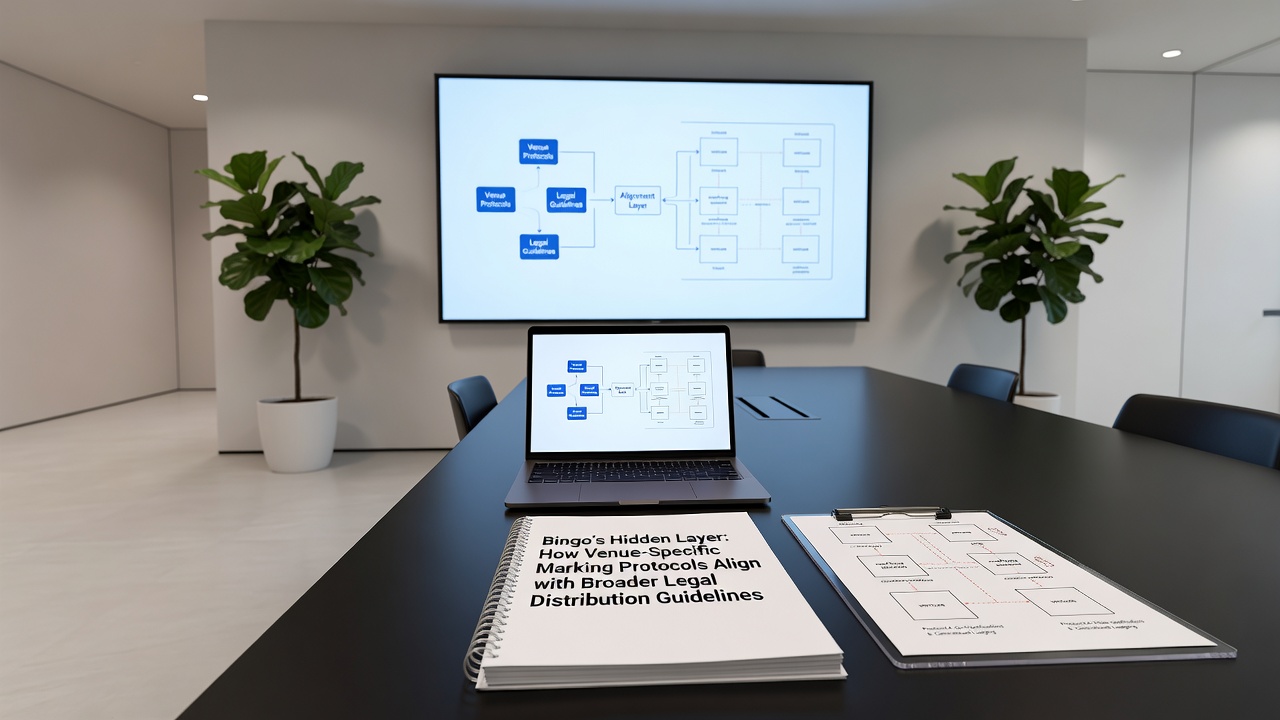
What's notable is the way these protocols accommodate regional customs without violating overarching rules, for instance by incorporating local terminology into log entries while preserving the core data fields required for legal reporting. A facility might use abbreviated codes familiar to regular players yet still feed complete information into systems that track cumulative payouts against annual caps or tax thresholds. According to records maintained by the Alberta Gaming, Liquor and Cannabis Commission, such dual-layer documentation has helped venues maintain compliance during cross-border prize pool reconciliations.
Implementation Patterns Across Jurisdictions
Implementation follows patterns where larger chains standardize base marking software and then permit individual venues to add site-specific overlays that address local enforcement nuances. This approach satisfies distribution guidelines that emphasize both uniformity in reporting and flexibility for community-based play variations. Studies of operational data reveal that halls adopting hybrid systems experience smoother interactions with auditors because the venue layer provides context that the broader legal framework alone cannot capture.
One documented case involved facilities coordinating markings to flag special events, such as charity-linked games, so that proceeds flow correctly under designated allocation rules. The markings serve as visual and digital cues that prompt immediate segregation of funds, preventing commingling that could breach distribution statutes. Observers have noted that these cues become especially useful during peak periods when multiple prize categories activate at once.
Developments Expected in July 2026
Regulatory updates scheduled for July 2026 in several jurisdictions will require enhanced digital integration of marking protocols with distribution tracking platforms, and venues have already begun testing software that embeds compliance flags directly into each card mark. These changes aim to streamline reporting for linked games that span multiple oversight areas, while preserving the physical marking traditions that players expect. Data projections from industry reports suggest adoption rates will climb steadily as halls align their systems ahead of the deadline.
Conclusion
Venue-specific marking protocols ultimately serve as practical bridges between everyday bingo operations and the legal structures governing prize distribution, creating verifiable pathways that regulators rely upon for accountability. As jurisdictions refine their expectations, these hidden layers continue to evolve in ways that maintain both operational flow and statutory adherence across diverse settings.