Bingo Grid Geometry: How Winning Shape Dimensions Dictate Record Retention Periods and Cross-Venue Audit Triggers Under Fragmented Licensing Systems
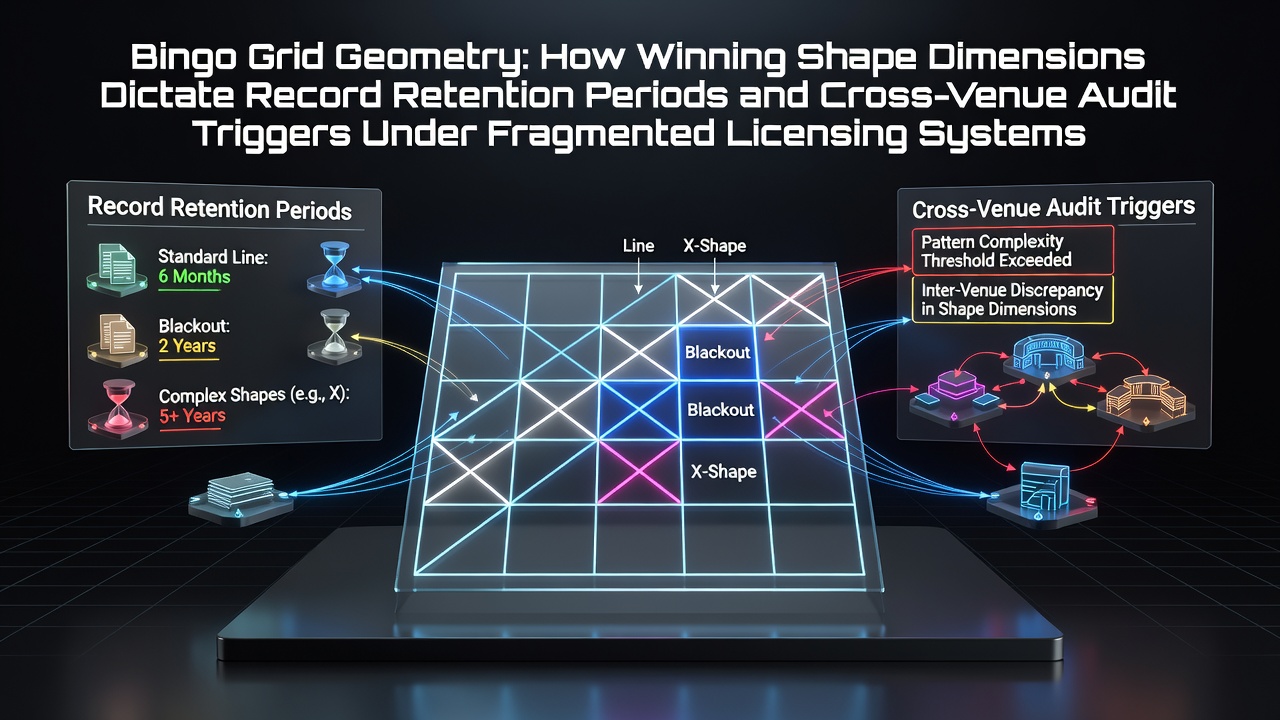
Standard bingo cards measure five columns by five rows with the free space centered in the middle square, yet the geometry of winning patterns varies widely across venues and creates measurable differences in how regulators track and store game data. Straight-line patterns that cover five numbers horizontally or vertically involve fewer cells than diagonal configurations or more elaborate shapes such as postage stamps and picture frames, and these dimensional distinctions directly influence the length of time operators must retain session records under state-specific licensing rules.
Regulatory frameworks in different jurisdictions treat pattern complexity as a compliance variable rather than a uniform standard, so a venue in one state might archive data for three years when players complete a four-cell corner pattern while another jurisdiction requires five years for the same shape because its licensing code ties retention periods to the total number of marked cells. Observers note that larger geometric shapes spanning twelve or more squares generate more extensive verification trails during prize validation, which leads licensing boards to impose extended retention schedules to support potential reviews.
Pattern Dimensions and Record-Keeping Mandates
Fragmented licensing systems mean each state or tribal authority sets its own formulas linking shape size to data storage requirements, and facilities operating across borders must reconcile multiple overlapping rules. Data compiled by the National Indian Gaming Commission shows that patterns exceeding eight marked cells trigger automatic extensions of retention periods by twelve to eighteen months in several western states, while smaller line patterns remain under shorter three-year cycles unless prize amounts exceed preset thresholds. Those thresholds themselves often scale with pattern geometry because regulators view complex shapes as higher-risk configurations that warrant longer audit windows.
Operators track these variables through software that logs every winning combination's cell count and spatial arrangement, then automatically applies the longest applicable retention rule from all active licenses. This automated matching reduces manual errors yet still requires periodic manual audits when cross-jurisdictional discrepancies surface, particularly when a single session produces winners using both compact and expansive patterns.
Cross-Venue Audit Triggers
Audit triggers activate when pattern dimensions match criteria that regulators associate with unusual prize clustering or potential collusion indicators, and the same geometric thresholds used for record retention also feed into these detection algorithms. In July 2026 several midwestern licensing bodies updated their shared database to flag any session where a blackout pattern covering all twenty-four playable cells coincides with prize payouts above a certain level at multiple venues within a thirty-day window. The update expanded the list of monitored shapes to include new variants such as the "arrow" and "kite" configurations that had previously fallen outside standard reporting categories.
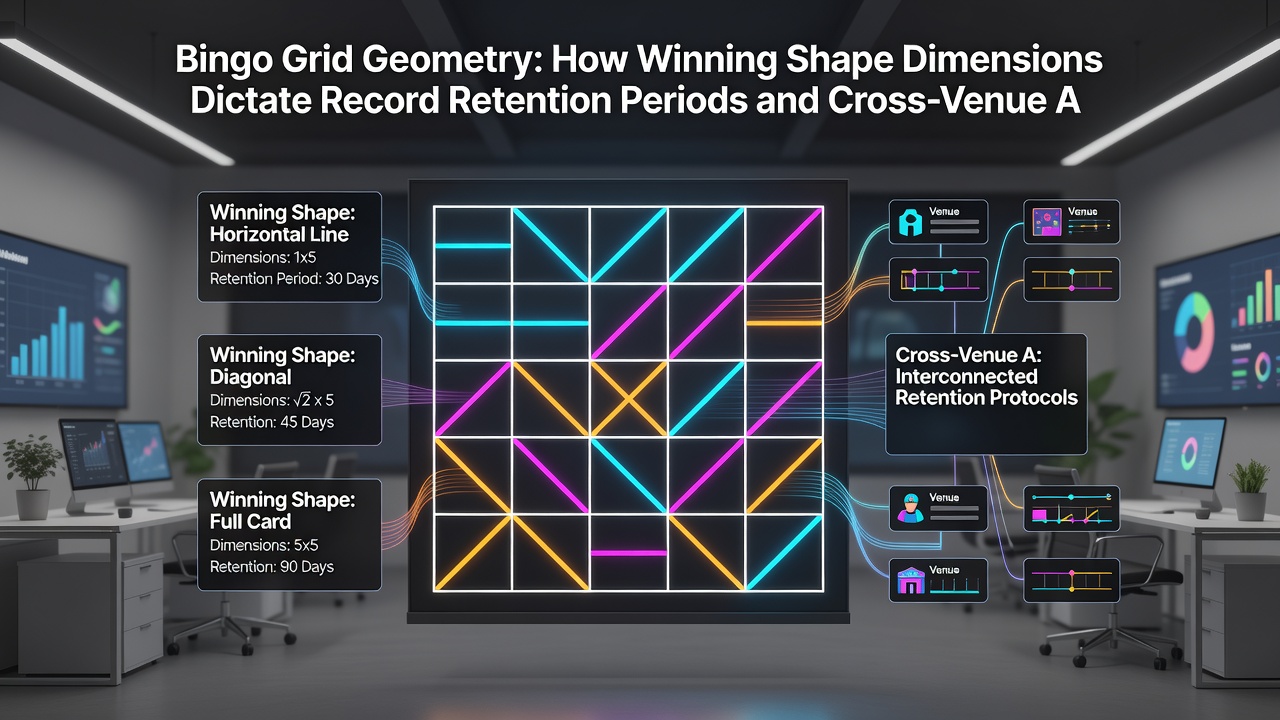
Cross-venue data sharing relies on standardized descriptors for each pattern's bounding box and cell count, allowing systems in neighboring states to compare activity without exchanging full player records. Research from the University of Nevada's gaming studies program indicates that facilities using these standardized descriptors experience 22 percent fewer manual audit requests because automated flags catch anomalies earlier in the retention cycle. When flags do trigger, auditors focus first on sessions involving patterns whose dimensions exceed the median size for that venue's typical play, then expand review to adjacent dates if initial findings warrant deeper examination.
Regional Variations in Licensing Formulas
Licensing formulas differ sharply between coastal and inland authorities, with some states weighting diagonal patterns more heavily than horizontal ones because diagonals historically correlate with higher variance in win rates according to internal compliance reports. Venues in those states therefore apply longer retention periods to diagonal wins even when cell counts match simpler line patterns, and the resulting data sets become primary sources for cross-border comparisons when operators seek multi-state approvals. Industry associations such as the North American Association of State and Provincial Lotteries have published guidance documents that help operators map these weighting schemes across jurisdictions without prescribing any single approach.
Equipment calibration records must also capture the exact coordinates of each winning pattern so that later audits can reconstruct whether the called numbers aligned with the claimed shape dimensions, and this coordinate-level logging adds another layer to storage requirements. Facilities that fail to maintain coordinate logs for patterns above a certain complexity face license review regardless of prize size, illustrating how geometry functions as an independent compliance factor rather than a secondary detail.
Conclusion
Geometric properties of bingo winning patterns therefore serve as practical inputs for both record retention schedules and automated audit systems operating under fragmented licensing regimes. Operators maintain compliance by mapping each pattern's cell count and spatial footprint against the strictest applicable rule from every active license, while regulators use the same metrics to prioritize review resources across venues. Continued updates to shared databases, including those scheduled for implementation in mid-2026, reinforce the connection between shape dimensions and oversight mechanisms without imposing uniform national standards.